Retro 0.7 Cu Ft Countertop Microwave (700W) Guide
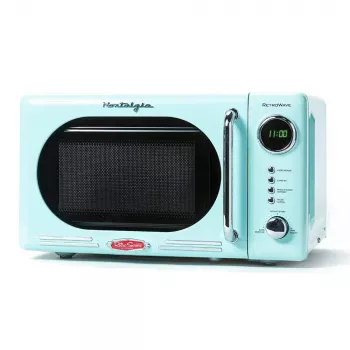
Retro Countertop Microwave Oven with Digital Display – 0.7 Cu. Ft., 700W
A compact countertop microwave with a retro look can add character to a kitchen without sacrificing everyday convenience. This 0.7 cu. ft., 700W model pairs a digital display with practical heating capacity for quick meals, snacks, and reheating in smaller spaces like apartments, dorms, and office breakrooms. If the goal is simple, reliable heating in a smaller footprint—without a built-in installation—this style-forward microwave is designed to fit right in.
What Stands Out at a Glance
- Countertop-friendly size designed for smaller kitchens and limited prep space
- 0.7 cu. ft. capacity suited to single-serve meals, leftovers, and common microwave-safe containers
- 700W cooking power aimed at consistent reheating and simple cooking tasks
- Digital display for clear time readouts and straightforward operation
- Retro styling that can complement vintage-inspired or colorful kitchen setups
Key Specs and Daily Use Fit
For many households, a microwave is less about gourmet cooking and more about getting everyday tasks done: warming coffee, reheating soup, steaming a quick side dish, or defrosting something for dinner. A 0.7 cu. ft. countertop unit is built for those routines—especially when the kitchen (or breakroom) space is limited.
With 700 watts of cooking power, it’s typically a better match for reheating and light cooking than for large batch jobs. The main difference compared with higher-wattage microwaves is that you may need a little more time, especially for dense foods. The digital display helps here by keeping timing easy to track at a glance, which is helpful when multitasking or preparing multiple items back-to-back.
| Feature | Details |
|---|---|
| Product type | Retro countertop microwave oven |
| Capacity | 0.7 cu. ft. |
| Cooking power | 700W |
| Display | Digital |
| Best for | Reheating, simple cooking, defrosting, small-space kitchens |
Where a 0.7 Cu. Ft. Microwave Makes the Most Sense
Smaller-capacity microwaves shine when the priority is convenience without committing a large section of the counter. They’re also easier to “fit in” visually, especially when the design leans retro and looks more like a decor choice than a bulky appliance.
- Apartments and condos: keeps countertop footprint modest while covering everyday needs
- Dorm rooms and studios: a practical size for quick meals and late-night snacks (where allowed)
- Office kitchens: supports individual portions without taking over shared space
- Secondary microwave: useful as an extra unit for basements, guest suites, or home offices
- Style-forward kitchens: retro design can serve as a functional accent piece on open shelving or counters
Tips for Better Results with 700W Cooking Power
Lower-wattage microwaves can still deliver great results—especially for reheating—when timing and technique are adjusted slightly. A few habits can make food heat more evenly and help prevent overcooked edges or cold centers.
- Add time in short steps: 700W may need slightly longer heating than 900W–1200W microwaves, so increase in 10–20 second increments.
- Stir or rotate mid-cycle: this helps reduce hot spots, especially with soups, pasta, and saucy foods.
- Use microwave-safe covers: covers minimize splatter and can help hold steam for more even heating.
- Let food rest briefly: a short rest after heating allows temperatures to equalize before eating.
- Defrost carefully: use shorter intervals and check frequently to avoid partially cooking thin edges.
For general microwave safety and performance guidance, reputable references include the U.S. Food & Drug Administration (FDA) microwave oven radiation overview and the USDA food safety guidance for microwave ovens.
Placement, Safety, and Care Basics
Countertop microwaves are simple to set up, but placement matters for both performance and long-term reliability. Give the unit room to breathe, keep the door area clean, and stick with microwave-safe cookware.
- Keep ventilation paths open: allow space around the sides and back per the manufacturer’s guidance.
- Use microwave-safe containers: avoid metal, foil, and containers not rated for microwave use.
- Prevent steam burns: open covered dishes carefully and point vents away from hands and face.
- Clean regularly: wipe the interior after spills and splatters to reduce odors and stuck-on residue.
- Check the door seal: keep the door area clean and ensure it closes properly for safe operation.
Is This the Right Size for Common Items?
| Item type | Typical fit in 0.7 cu. ft. | Notes |
|---|---|---|
| Large mug / soup bowl | Good | Heat in shorter cycles and stir if needed |
| Standard small/medium plate | Often good | Rotation may be limited with very wide plates |
| Single-serve meal container | Good | Leave headspace to prevent boil-over |
| Oversized platter | May be tight | Check turntable clearance before heating |
| Microwave popcorn bag | Usually fine | Stop when popping slows to prevent burning |
Product Details and Availability
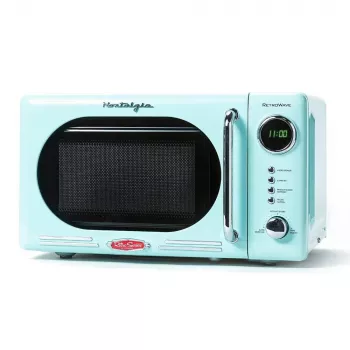
If a compact, style-conscious microwave is the goal, the Retro Countertop Microwave Oven with Digital Display – 0.7 Cu. Ft., 700W is currently in stock and ready for small-space kitchens, dorm-style setups, and everyday reheating.
FAQ
Is 700W enough for everyday microwave use?
Yes—700W is typically plenty for reheating, defrosting, and simple cooking. Some foods may need a bit more time than in higher-wattage microwaves, so it helps to add time in short increments and stir or rest food for more even heat.
What does 0.7 cu. ft. capacity mean in real life?
It’s a compact interior that usually fits common bowls, mugs, and smaller plates comfortably. Oversized dishes may feel tight or may not rotate well, so checking container size and turntable clearance can prevent headaches.
How should a countertop microwave be placed for safe use?
Place it on a stable, level surface with ventilation space around the sides and back per the manual. Keep the vents clear, avoid water splashes and hot surfaces nearby, and use a properly rated outlet—ideally not shared with high-draw appliances.







Leave a comment